
Holy Order
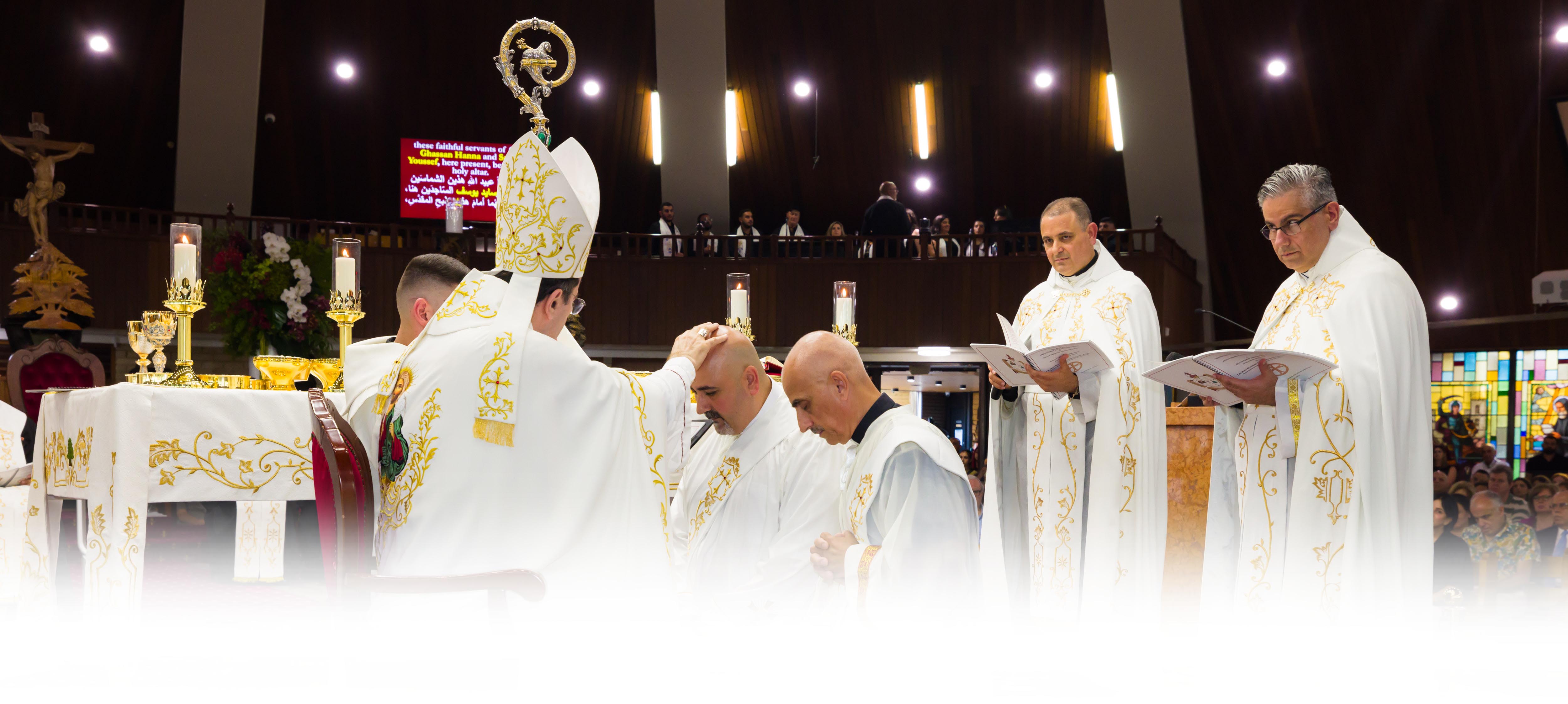
All priesthood is a sharing in the priesthood of Christ. Mystically, Christ is the only priest, and the human priest is a representative of Christ and also acts in imitation of Him. Through the Mysteries, celebrated by the priesthood, the faithful can receive grace, and more closely imitate Christ. Without sacred orders, there could be no Church. The priest stands between God and humanity, mediating, and serving as a sort of a bridge. For this, the priest must lay himself down. The priest does not mediate because of any personal qualities he may possess. Rather, the priesthood within him, sharing in the priesthood of Christ, is used by God to send His grace through the Mysteries.
The priesthood was a central feature of the Mosaic temple religion, and of Christian life from the very first days of the Church. St Ignatius of Antioch, an ancestor of the Maronite Church (which is an Antiochian Church) wrote in his letter to the Magnesians: “Be zealous to do all things in harmony with God, with the bishop presiding in the place of God and the presbyters in the place of the Council of the Apostles, and the deacons … entrusted with the service of Jesus Christ” (6.1). St Ephrem, a very important link in the Maronite tradition, wrote:
Blessed is the priest who, in the sanctuary, offers to the Father the Father’s Child, the fruit plucked from our tree, although He is entirely from Majesty. Blessed are the consecrated hands that offer Him and his lips wearied with kissing Him.
As with the Old Testament priesthood of Aaron, which we often remember, the priest at the altar: “stands in between God and all humanity” (Entrance Hymn, Feast of the Consecration of the Church.) In the liturgy for the Commemoration of Deceased Priests, the Incense Prayer asks God to clothe deceased priests with the “glory of your priesthood and the robe of the righteous.” This is the robe of light we saw in the Baptism ritual. In the tradition, light stands not only for teaching, understanding and wisdom, but also for innocence and purity. Light, for us, is the presence of God and His holiness, hence the prayer that the priest be vested with light.
Later in the liturgy, the opening prayer reads: “They cared for your flock, served at your altars, and celebrated your Mysteries.” Caring for the people of God and serving the Mysteries are two sides of doing God’s work in this world. The work of God involves first of all the service of the Mysteries, because the Word of God, Our Lord Himself, becomes present in the Eucharist. Even the teaching of the Gospel and its message is subsidiary to the sacramental service.
In the Maronite tradition, the spiritual quality of the confessing priest was considered to be important. It was thought to be a great boon to the spiritual life of the penitent if the priest was a true spiritual father.
Copyright © 2013-2025 Our Lady of Lebanon Co-Cathedral