
Baptism
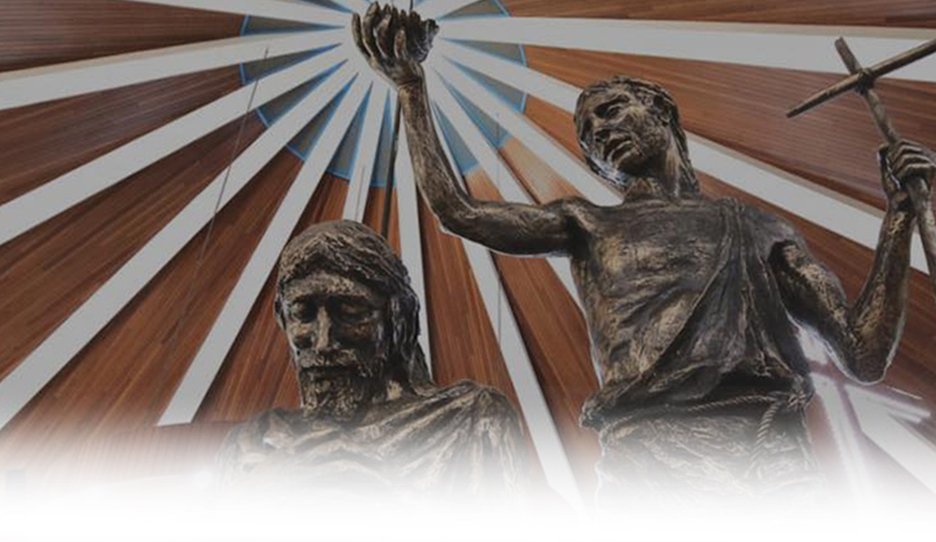
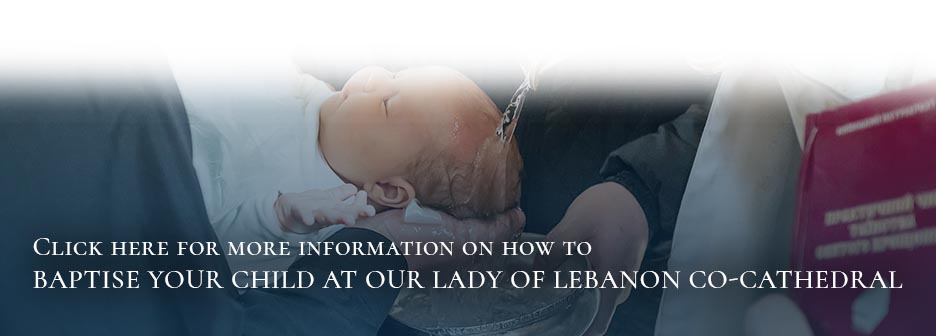
Our baptisms are the baptism of the Lord in a mystical sense which we cannot fully understand, so we can speak of it as a sharing in His baptism. For the ceremony, the candidate, the candidate’s sponsors, and, with young candidates, their parents and any others who wish to attend, are gathered at the font. The font is usually at the front of the church or, at any event, on the floor before the altar, because baptism is the doorway to all the Mysteries. Just as the candidate, once baptised, is taken from the font to the altar, while singing the “Ya Oumallah,” a hymn to the Mother of God, so too, there is a change from ordinary clothes to the white robe of baptism.
The child or adult who has been baptised is now a child of Mary, as was Christ Himself: another way in which the Maronite Mysteries represent a very real imitation of the life of the Lord. The shining clothing represents the brilliance of the soul of Christ which was revealed to us in His Transfiguration. It means that our souls, at that moment of baptism, are actually like the soul of the Lord. Hence the continual stress of maintaining our God-given purity, something which we shall see reflected in all Mysteries.
In the Maronite tradition, it is said that humanity originally wore a garment of light, a sign of the sanctity of their bodies and souls. But when Adam and Eve sinned, they lost this covering robe, which is how they knew that they were naked. Baptism restores this garment of light to our souls, which gives added meaning to the white which the candidates wear or are changed into. The final prayer of the ceremony asks that Our Lord Himself may be our vestment of light when we come to leave the world.
The waters of baptism are a new womb in which we are reborn, this time, coming forth through the gracious action of the Holy Spirit (as indicated in the Gospel of St John) This theme of Baptism as rebirth, and therefore a new womb, relates to the Eastern Christian concept that the grace, mercy and forgiveness of God is not – as it were – a legal decision made by a judge sitting in a court of law, but a remaking, a new creation of the person who receives that grace, mercy and forgiveness.
For this reason, baptism is also a form of resurrection, because the one who was spirituality dead in sin now lives in the grace of God.
The greatness of baptism is shown by one of the Epistles of St Peter available for the ceremony:
Christ also died for sins once for all, the just for the unjust, so that He might bring us to God, having been put to death in the flesh, but made alive in the spirit … (I)n the days of Noah, during the construction of the ark, in which a few, that is, eight persons, were brought safely through the water, corresponding to that, baptism now saves you - not the removal of dirt from the flesh, but an appeal to God for a good conscience - through the resurrection of Jesus Christ. (1 Peter 3:15-21)
Copyright © 2013-2025 Our Lady of Lebanon Co-Cathedral