
Anointing of the Sick
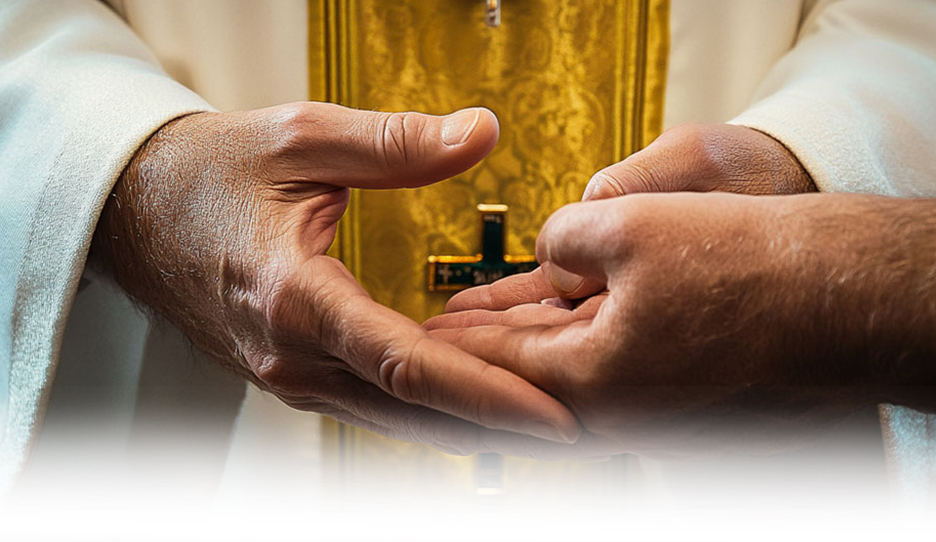
In many parts of the Gospels, the healing miracles of the Lord are recorded. The Mystery of Holy Anointing is a sharing in these wonders, but with us, the effects of the anointing are directed first at the soul. There are many accounts of people having been well and truly healed, sometimes in an astounding way, through this Mystery, but that is not its chief end. Rather, it is intended to prepare the soul of the living to accept, in a fit and worthy manner, the separation of the soul from the body.
We were not made to die, but to live. So, for the Maronite tradition, the separation of soul from body is unnatural, which is a part of the reason why this prospect can seem not only sad to us, but also as if it is in some way wrong. This is quite correct, because were it not for the Fall in the Garden of Eden, we would not have died. When Sin entered the world, so too did Death. But that is not all that is to be said, for there is also resurrection; and as Christ rose from the dead, before He could be anointed (Mark 16:1), we are ordained to also rise, but after our anointing. For just as Christ was to rise from the dead, and so anointing was not proper for Him, it is most proper for us.
Further, anointing is the very name of Christ, for the word “Christos” is a Greek translation of the Hebrew word Messiah which means “the anointed.” So by receiving the Mystery of Anointing we take His Holy Name upon ourselves. Oil was also used to anoint the Old Testament kings, and so we share in the Kingship of Christ. In our context, this means to be lord over our senses and our appetites. Not to stray because of unruly passions, but rather to be able to control and direct our passions.
This sacrament is based on what Our Lord did and said, but the clearest testimony to it from the New Testament is that of the Epistle of St James. Although the Gospel of St Mark and the Epistle of St James both speak of the sick recovering, this does not always happen. Neither can the patient be blamed as lacking faith. There is no suggestion in the Maronite rite that those who are sick or die do so because of sin. St Luke tells us that when some people were wrongly killed by Pilate, or who died when a tower fell on them were not worse than others (Luke 13).
It would be more correct if we prayed for that optimum of that degree of health which God wills for a person. Sometimes people will die. But we cannot really know when. We can, however, pray to the Lord to remit their suffering, and to grant us a happy life together, but we know that it must have a limit.
Suffering can bring us to see that there is a problem (whether physical or psychological) and move us to take steps to rectify it. Indeed, the great salvation which Jesus made for us was brought about by His suffering: “Because his soul has laboured, he shall see and be filled: by his knowledge shall this my just servant justify many, and he shall bear their iniquities” (Isaiah 53). This is a prophecy concerning Our Lord: He was the Suffering Servant. He did not come to end our suffering at once, but rather, to share it.
Copyright © 2013-2025 Our Lady of Lebanon Co-Cathedral